Strengthening the organization
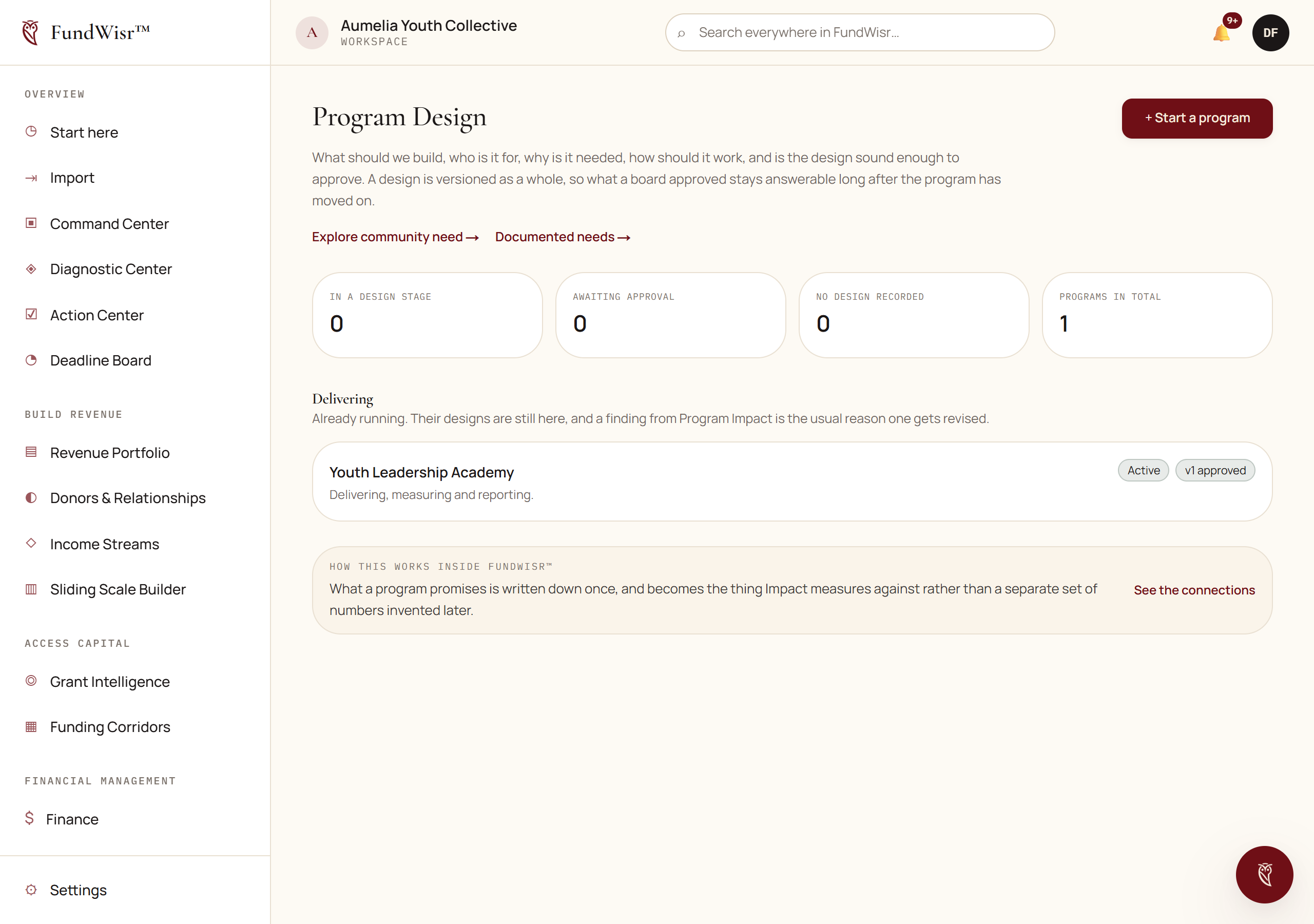
Program Design
What you should build and why: the need, who it serves, how it is meant to work, and whether the design is sound enough to approve.
On this page
Design and Impact are two tools
They share one program record and never duplicate it, but they answer different questions, and running them together is how organizations end up unable to say what they originally intended.
- Program Design
- What should we build, for whom, why is it needed, and is the design sound. Everything before the program runs.
- Program Impact
- What actually happened, what changed, and what to do about it. Everything after.
The unit of work is a version, not a program
A design version is a snapshot of the entire design moving together: the need, the population, the theory of change, the logic model, the outcomes, the measurement plan, and the approvals.
That matters because of the question a funder or a board actually asks, which is what did we approve. A system that versions each piece separately can tell you what the logic model said in March without being able to answer that.
| Status | Means |
|---|---|
| Draft | Being worked on. Change anything. |
| In review | Submitted for approval. Stop editing. |
| Approved | This is the design of record. |
| Rejected | Not approved, and the reason is recorded. |
| Superseded | A later version replaced it. Kept, because it is what was approved at the time. |
| Withdrawn | Pulled before a decision. |
Working through a design
Start with the need, not the program.
The need is a statement about the community, evidenced. If you cannot evidence it, that is the finding, and it is better found now than in a declined application.
Define who it serves, specifically enough to know whether somebody qualifies.
Write the theory of change: why you believe this activity produces that result.
This is the part reviewers read hardest, because it is where wishful thinking lives.
Build the logic model: inputs, activities, outputs, outcomes.
Outputs are what you did. Outcomes are what changed. Confusing them is the commonest weakness in nonprofit reporting.
Set the measurement plan, then submit the version for approval.
The measurement plan is the promise Impact will hold you to, so decide it before results exist to be flattered by.
Read next
- Program ImpactWhat actually happened: outputs, outcomes, indicators tracked over time, and the honest gap between what you measured and what you claimed.
- People ServedOne record per person moving through your programs, from first inquiry to alumni, with nothing overwritten as they move.
- Grant IntelligenceSearching for grants that fit, scoring the fit honestly, and tracking the ones you pursue through to reporting.
Something here wrong, missing, or out of date? Email support@fundwisr.ai and tell us which chapter. Documentation defects are treated as defects.